Bridging the Ship-to-Shore Divide: How the EU-Backed SEA4SHORE Initiative Reengineered Maritime Career Transitions
A transnational human capital framework earns the European Union’s rare “Good Practice Example” designation for solving a critical industry retention and operational bottleneck.
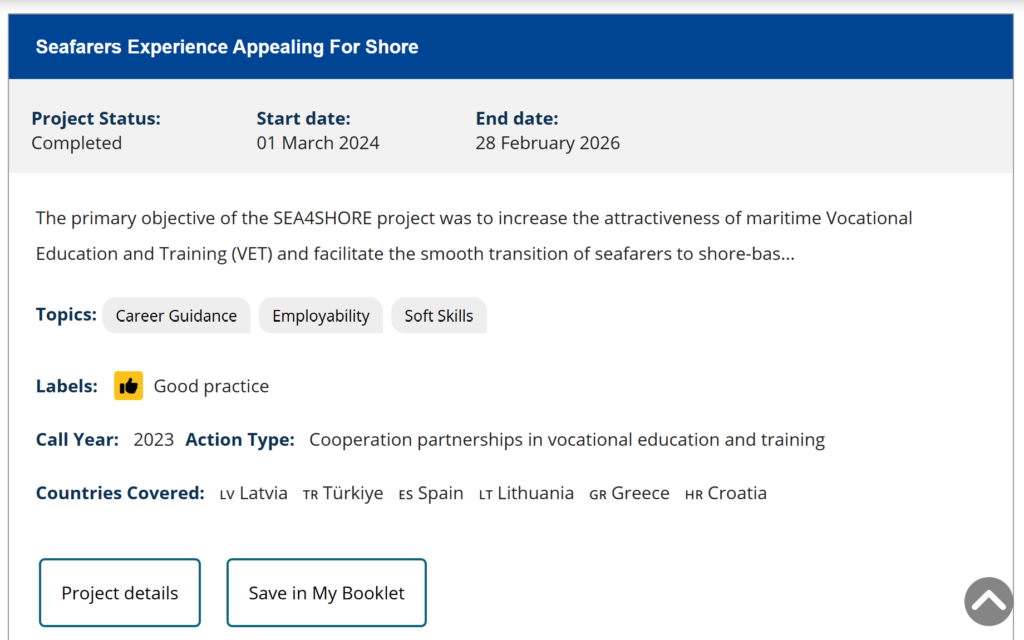
The global maritime sector faces a dual challenge: an acute shortage of specialized shore-based technical talent and an evolving retention crisis among experienced seafarers. Addressing this structural gap, the two-year European Union-funded Erasmus+ project SEA4SHORE (“Seafarers Experience Appealing For Shore”) has culminated in its final review by the State Education Development Agency (VIAA).
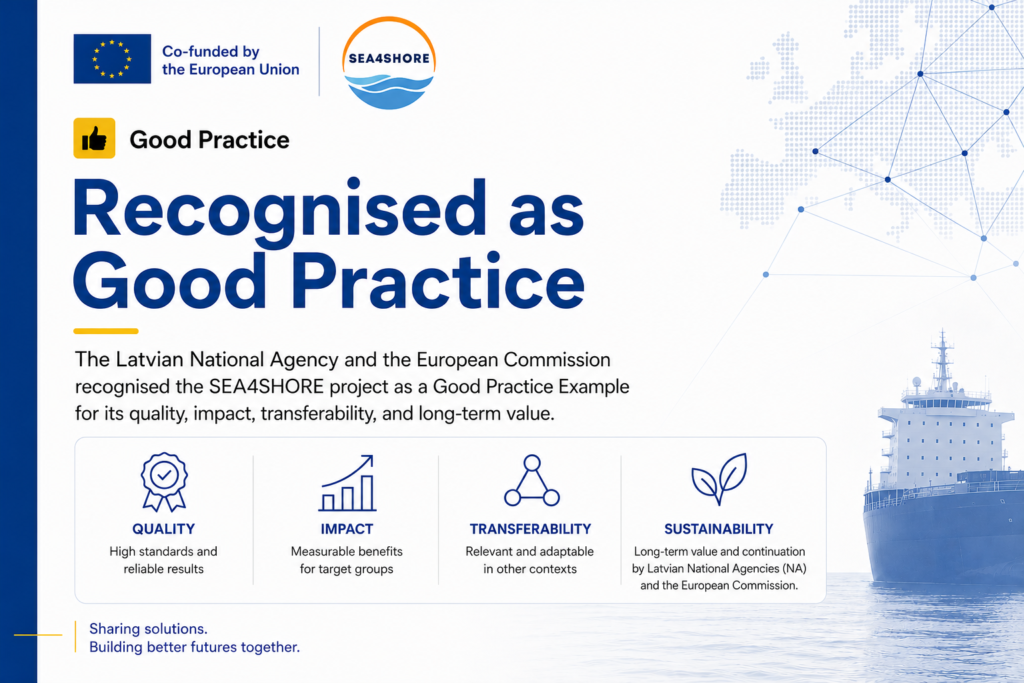
The project did not merely meet its benchmarks, it redefined industry standards. Formally designated as a “Good Practice” by the European Commission, the initiative has introduced the first open-access, multilingual digital self-assessment engine designed to map complex seafaring competencies directly to shore-based corporate, logistics, and technical profiles. Driven by an elite six-partner European consortium including Riga Technical University (RTU) and MARITIME INNOVATORS, the project offers a scalable blueprint for preserving maritime human capital during an era of unprecedented digital and environmental transition.
Introduction: The Human Capital Leakage in Global Shipping
The maritime industry is undergoing its most profound transformation since the transition from sail to steam. Decarbonization mandates, automated port ecosystems, and the digital overlay of modern fleet operations require a highly specialized onshore workforce. Paradoxically, the industry has historically struggled with a costly structural leak: the loss of institutional operational knowledge when seafarers transition to shore.
When a senior officer decides to leave the sea, their practical understanding of vessel dynamics, safety management systems, and regulatory compliance is frequently lost to the maritime cluster. This happens primarily because the industry lacks a standardized methodology to translate STCW (Standards of Training, Certification and Watchkeeping) competencies into corporate human resource frameworks. The SEA4SHORE project was conceived to dismantle this barrier, turning a fragmented career pivot into a structured, friction-free talent migration.
The Core Challenge: Translating Competency from Hull to Headquarters
For decades, the transition from ship to shore has been governed by informal networks, trial-and-error, or unoptimized corporate recruitment. Traditional human resource platforms are fundamentally unequipped to assess the true corporate value of a seafarers operational experience.
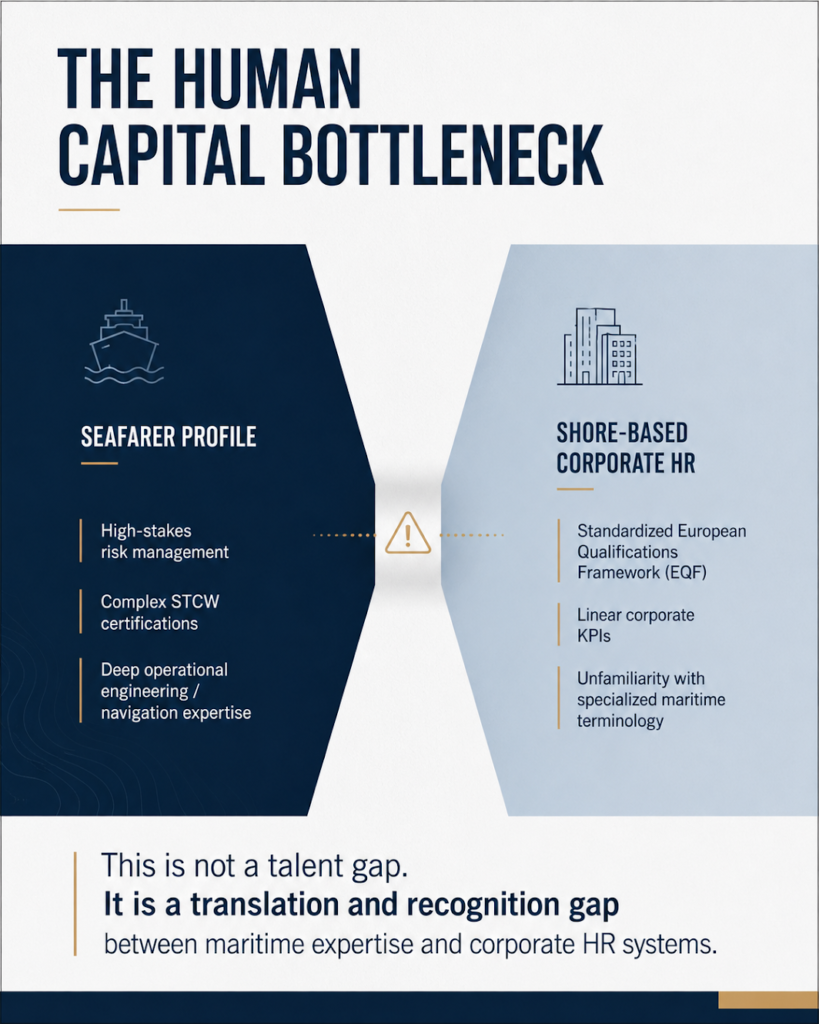
Without a transparent framework, shore-based employers struggle to evaluate maritime talent accurately, while transitioning seafarers face underemployment or frustrating career stagnation. This mismatch carries significant economic consequences, driving up recruitment costs and delaying critical digital and green initiatives across ship management, port operations, and marine technology companies.
A Transnational Alliance: The Power of Six Partners
The structural success of SEA4SHORE rests on its diverse, cross-border alliance. Bringing together six core partners from six key European maritime nations, the consortium blended top-tier academic rigor, technical innovation, and vocational expertise. This multilateral cooperation ensured that the final outputs were globally scalable and adaptable across distinct regional regulatory environments.
The SEA4SHORE Consortium Structure
- Riga Technical University (RTU) – Latvia: Serving as the project coordinator (via the Latvian Maritime Academy), RTU provided strategic leadership and anchored the project within European educational standards.
- MARITIME INNOVATORS – Turkey: Acting as the primary technical and research bridge, transforming intricate competence matrices into a responsive software architecture.
- Lithuanian Maritime Academy – Lithuania: Contributed crucial pedagogical insights and operational data drawn from seafaring education and certification pathways.
- University of Rijeka – Croatia: Provided deep academic research capabilities, hosting vital strategic alignment and review sessions.
- IDEC – Greece: Lent specialized expertise in European vocational training methodologies and organizational development.
- Universitat Politècnica de Catalunya (UPC) – Spain: Enhanced the technical validation of maritime engineering frameworks and alternative shore-based pathways.
The Strategic Solution: A Digital Self-Assessment Architecture
Rather than publishing static academic whitepapers, this six-partner alliance engineered a functional, market-ready digital platform. The project’s architecture shifts the paradigm from theoretical retraining to direct, dynamic competency matching.
Structural Performance: Expected vs. Delivered Output
| Performance Indicator | Original Project Target | Final Delivered Output | Strategic Impact |
| Structured Career Profiles | 120 Profiles | 125 Profiles | Expanded coverage across niche technical, digital, and green-shipping corporate roles. |
| Linguistic Accessibility | Core European Languages | 7 Languages Covered | Democratized access across major European maritime labor source countries. |
| Digital Ecosystem Footprint | Regional Pilot Testing | 2,700+ Unique Visitors / 580+ Active Engine Users | Immediate market adoption and proof of concept ahead of schedule. |
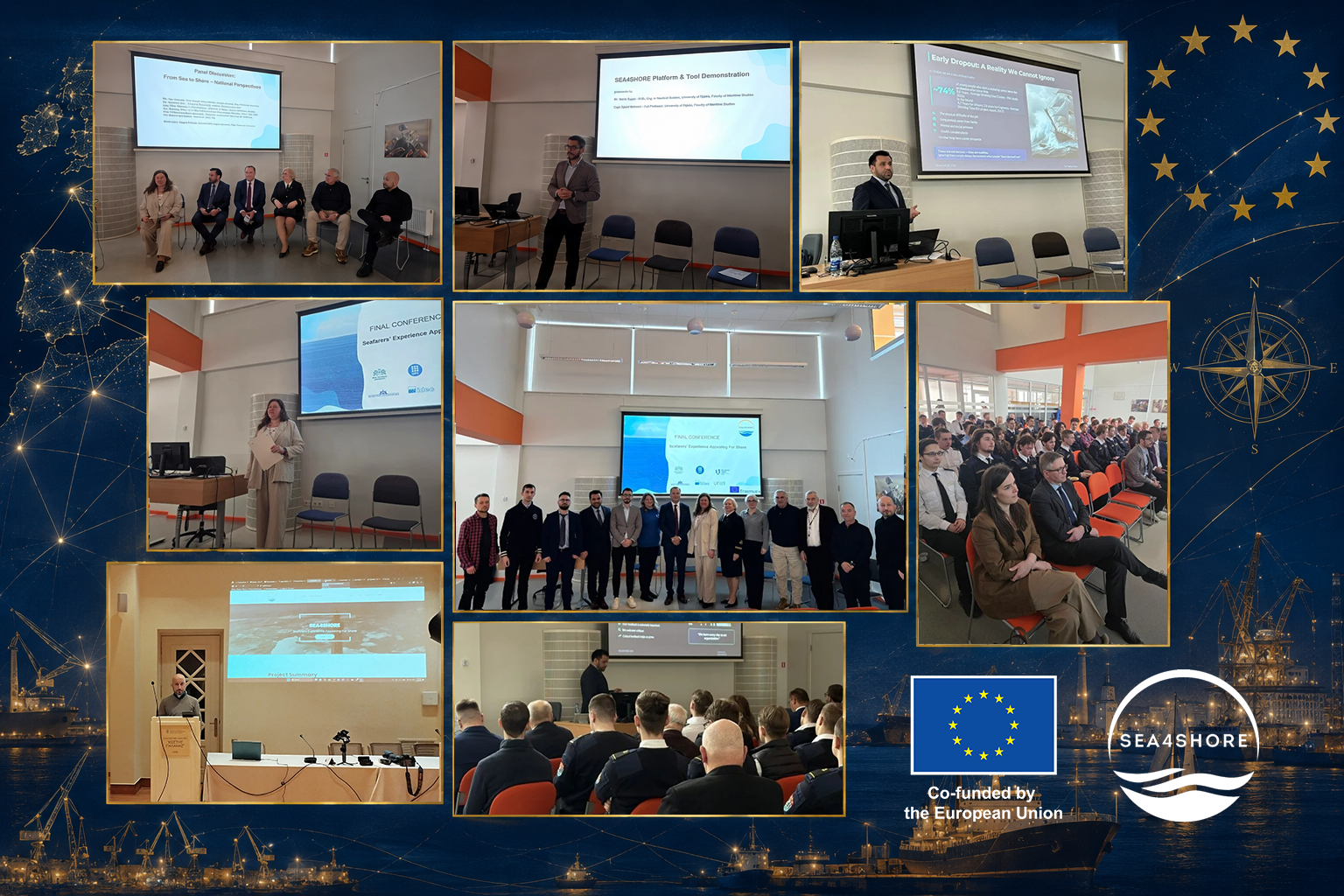
| Physical Stakeholder Engagement | Dissemination Meetings | 6 Major Conferences / 367 Core Industry Participants | Direct feedback loops established with shipowners, regulators, and educators. |
Deep Dive: The Technological Engine and Synergy
To translate abstract competency data into an intuitive, high-performance digital engine, the consortium relied heavily on the technical capability of MARITIME INNOVATORS. Capitalizing on extensive institutional investments in advanced IT architecture and maritime research, they worked dynamically alongside the other five partners to bring the engine to life.
“Securing the European Union’s ‘Good Practice’ designation validates what can be achieved when rigorous maritime research intersects with sophisticated IT architecture across international borders,” noted Ugurcan Acar, Founder and General Manager at MARITIME INNOVATORS. “Our objective was to strip away the administrative friction of career transitions. We are immensely grateful to Riga Technical University for their vision and leadership, and to all our partners whose synergy transformed this complex technical ambition into a tool that delivers genuine utility to seafarers worldwide.”
Market Validation over Academic Isolation
A key factor in the project’s high evaluation score was its insistence on external validation. Rather than operating in an academic silo, the six partners actively sought industry feedback. The tool was subjected to rigorous peer review by ship management companies, maritime unions, and international educational institutions. This process yielded formal letters of opinion and market endorsements, ensuring that the platform’s 125 career profiles directly match the real-world operational needs of the modern maritime corporate landscape.
Future Outlook: Long-Term Sustainability and the Blue Economy
The EU’s formal designation of SEA4SHORE as a Good Practice ensures that its methodology will serve as a foundational reference point for future European human capital initiatives.
To guarantee the long-term sustainability of the platform, the entire database, structural framework, and self-assessment engine will remain entirely free and publicly accessible to seafarers, maritime students, shipping line HR departments, and VET trainers. The permanent intellectual outputs have been fully integrated into the official Erasmus+ Project Results Dissemination Platform, preventing the “project fatigue” common to publicly funded initiatives and guaranteeing long-term open-access availability.
As the industry pivots toward autonomous operations, alternative fuel bunkering, and smart port logistics, the ability to seamlessly redeploy sea-proven expertise to the shore will dictate the competitive edge of regional maritime clusters. SEA4SHORE has provided the infrastructure to make that redeployment permanent, measurable, and highly efficient.
Key Takeaways
- 6-Partner Synergy: A robust alliance across Latvia, Turkey, Lithuania, Croatia, Greece, and Spain combined academic, operational, and digital expertise.
- Structural Bridge: SEA4SHORE introduces an open-access digital tool that maps STCW maritime competencies directly to shore-based corporate roles, removing transition friction.
- Exceeding Benchmarks: The consortium surpassed its delivery targets, building a database of 125 comprehensive career profiles operating seamlessly across seven languages.
- Open-Source Future: The platform remains completely free, hosted permanently via the Erasmus+ Project Results Dissemination Platform to support global seafarer welfare and industry retention.